Renaissance Broker

Test from the Renaissance Bank

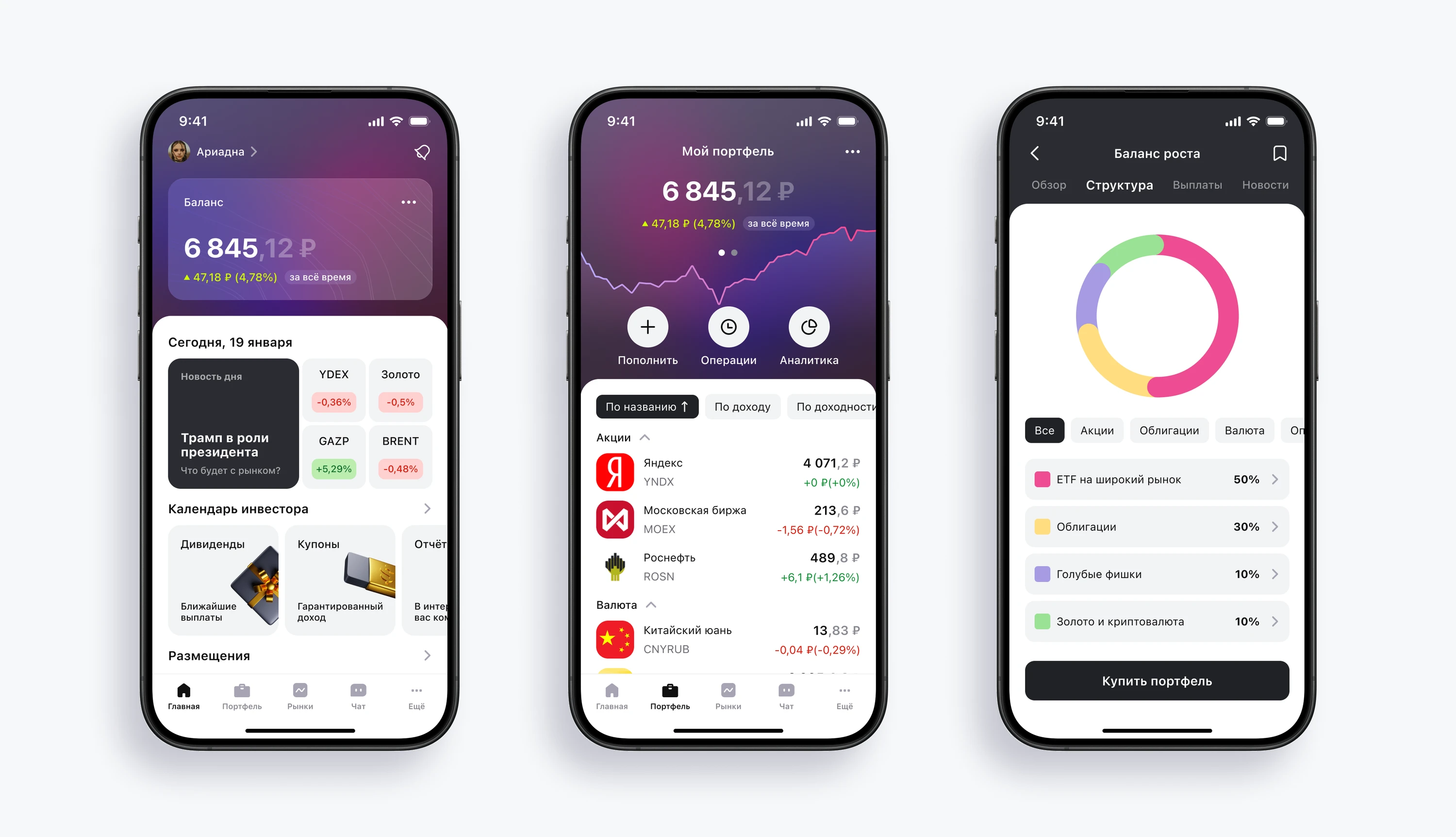
Three screens of the Renaissance Broker app

Problem

  • Now investments are in the main app of the bank in the relevant section. This complicates the use of all functions, as they are difficult to navigate (especially for beginners). Built-in section includes basic functions for investment management
  • Investments on the stock exchange are engaged in a very small proportion of customers of the bank (less than 2%).
Solution

Renaissance Broker, an investment app that combines an intuitive, learning interface for beginners with advanced analytical tools for professionals, allowing each user to easily start. Invest and manage your portfolio effectively.

Process

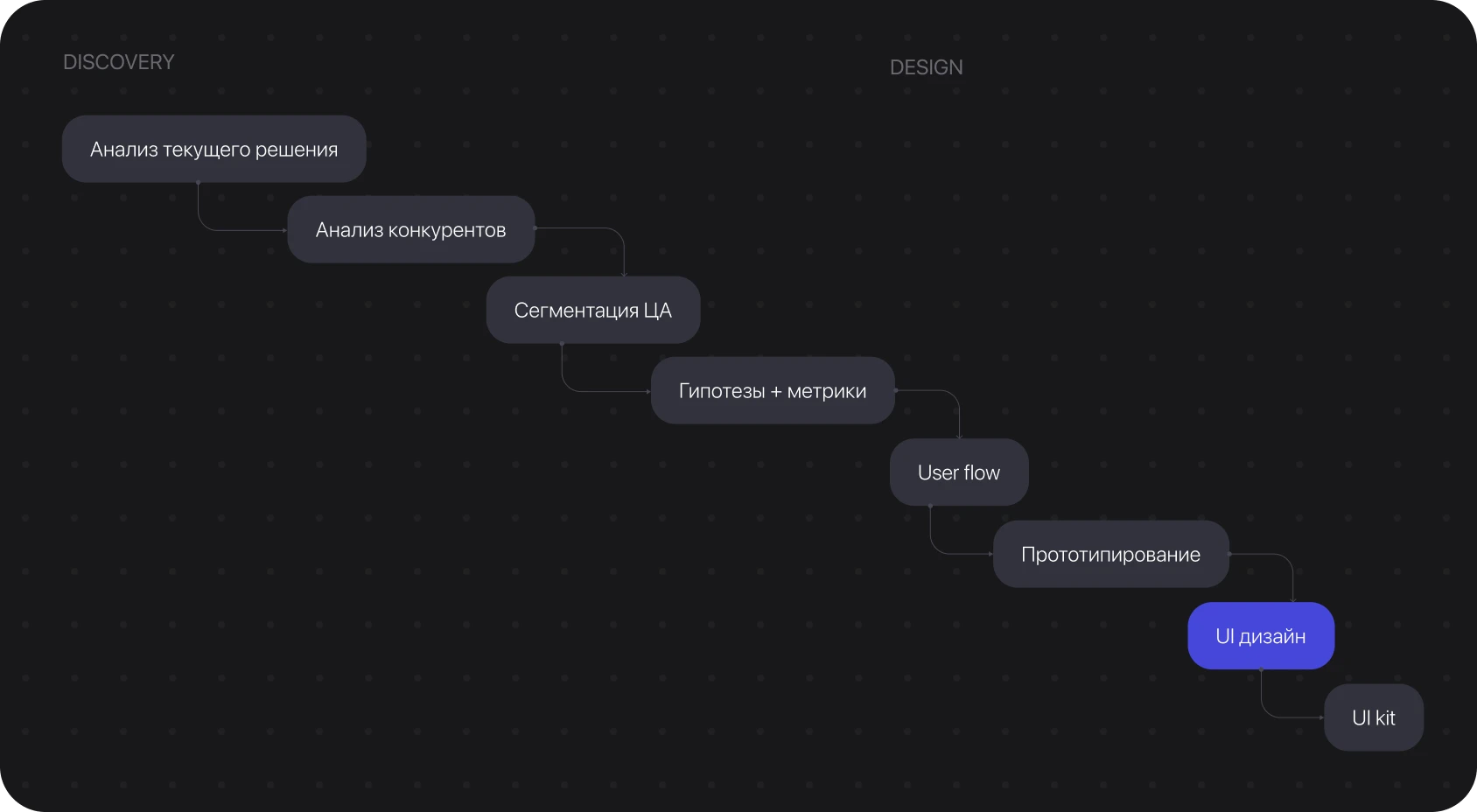
Workflow: From current solution analysis to UI kit

Research

I had no investment experience, so I first spoke with a friend who had been investing for several years. I learned which features he used most often and what mattered to him in an investment app. These insights helped me focus the research.

I also studied the investing fundamentals needed to understand how financial instruments work. ChatGPT helped me unpack complex terminology and summarize lengthy articles and research, saving considerable time at this stage.

Current product analysis

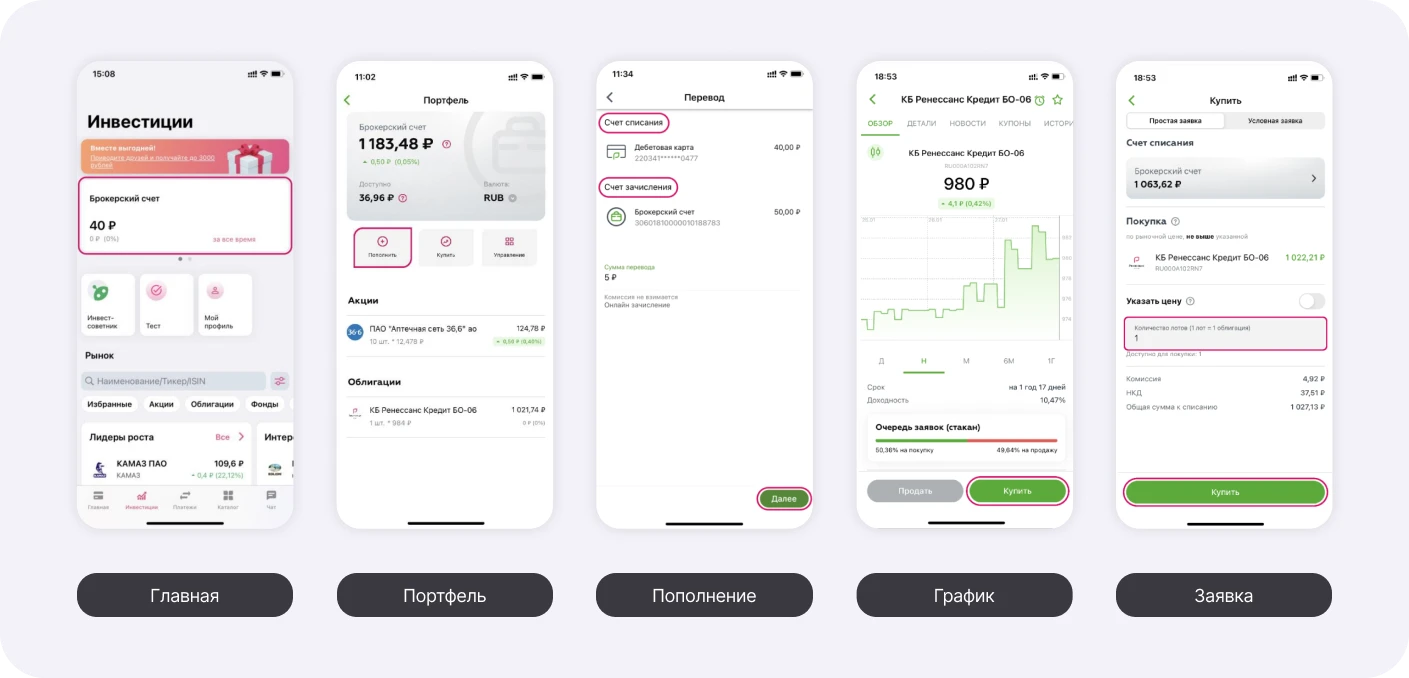
Five screens of the existing investment section
Screens of the existing section

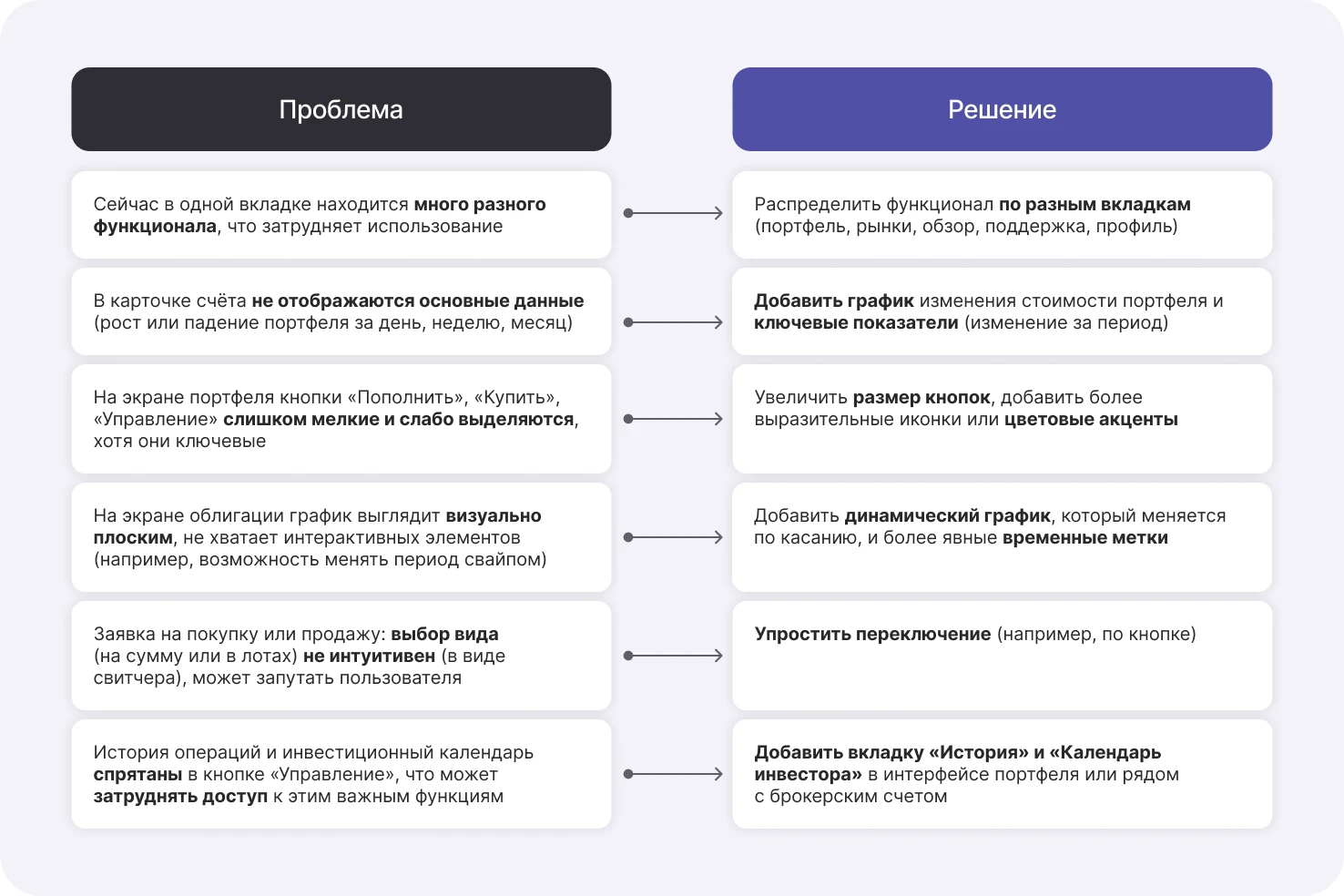
There is an investment section in the application of the bank, and I decided to start with its analysis. The lack of visual accents, some important features for investment management and a unique design that would distinguish the application from the competition are only part of the problems of the current solution.

Problems of current solution and ways of solving them

Competitive analysis

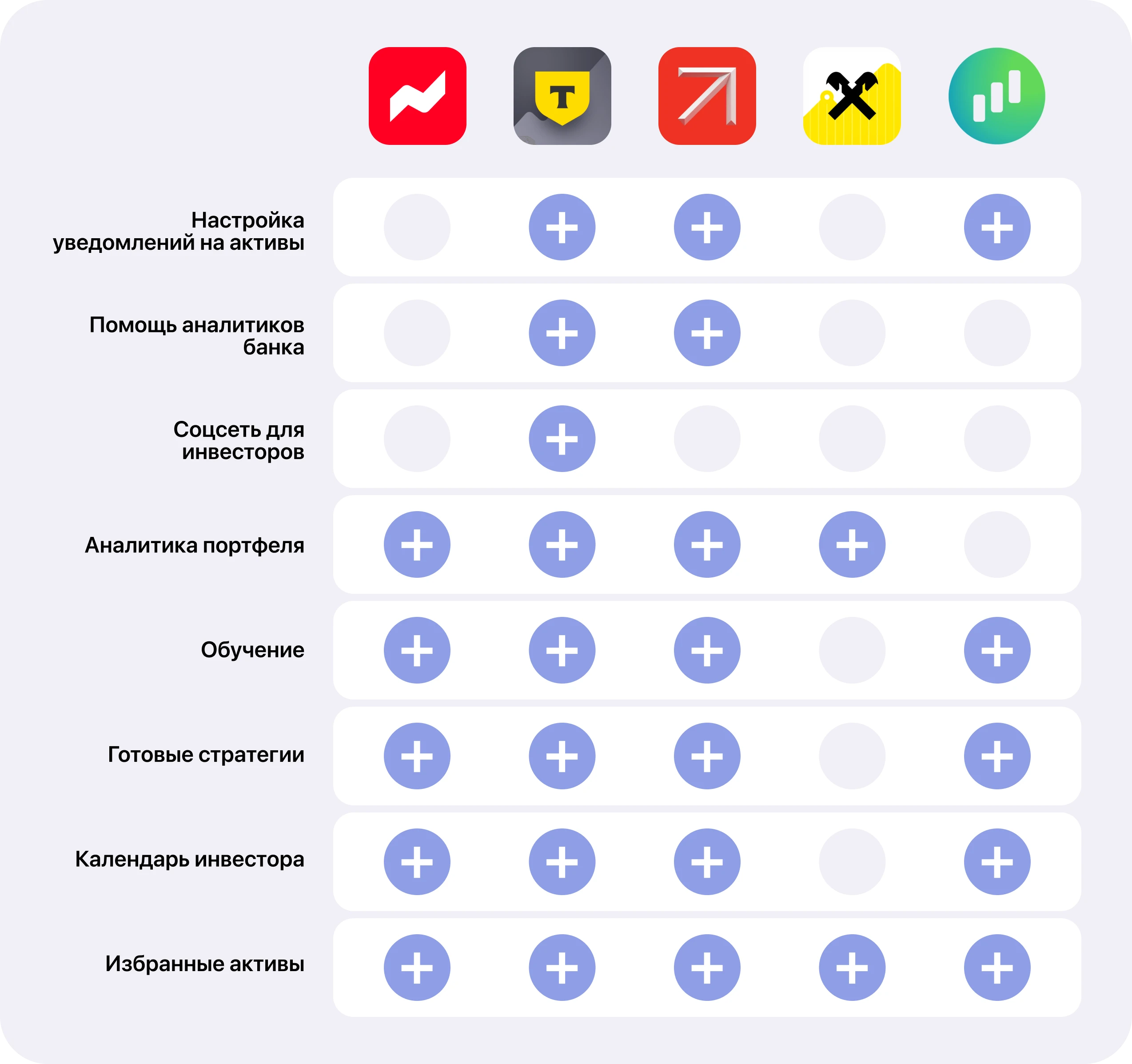
I analyzed the interfaces of 5 competitors: Alpha Investments, T-Investments, MTS Investments, Raiffeisen Investments and Sber Investments.

Pros: extensive investment management tools, training materials, analyst advice, ready-made strategies for beginners, portfolio analytics with industry filtering, application history.

Cons: In some applications (Rife and Sber) a reduced selection of the type of application, which may not be suitable for advanced investors.

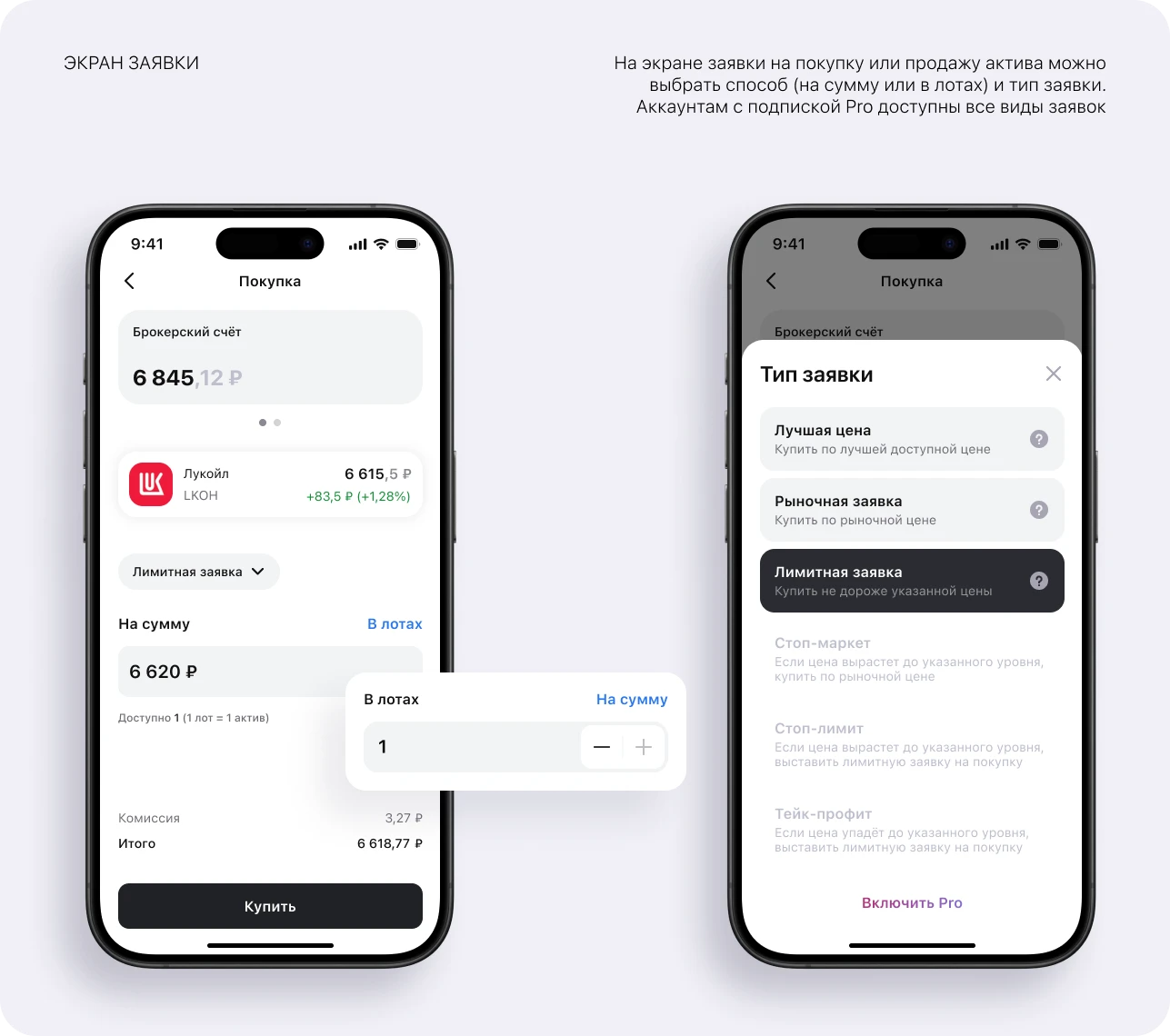
In Alpha Investments, the choice of application type varies depending on the tariff (on the Pro tariff there are additional options)

The T-Investment app stands out from other competitors with its “Pulse” – a social network for investors

Comparison of five investment applications

Key findings

Modern services strive to combine extensive tools with a simplified entrance for beginners. This approach confirms the idea of Research by UsabilityLabThe more affordable investment products become for the mass user, the more important it is to provide a clear presentation of complex functions and at the same time preserve advanced functionality for advanced investors.

Brand palette of the application "Renaissance Broker"

Target audience segmentation

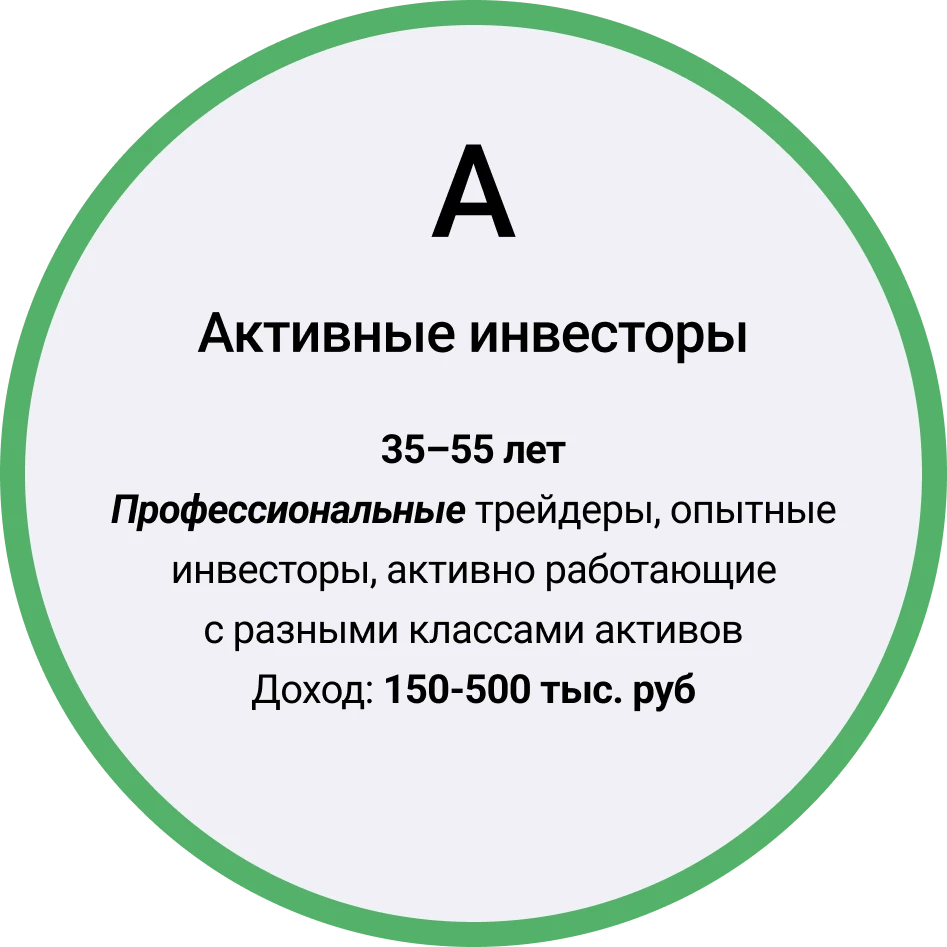
Segment A – Active Investors

These users tend to have significant life and professional experience, allowing them to navigate financial markets with confidence.

  • Make regular transactions and actively manage their portfolio
  • Use advanced application functions: analytical tools, market reports, automated trading algorithms
  • They are well aware of market trends and often look for new investment opportunities.
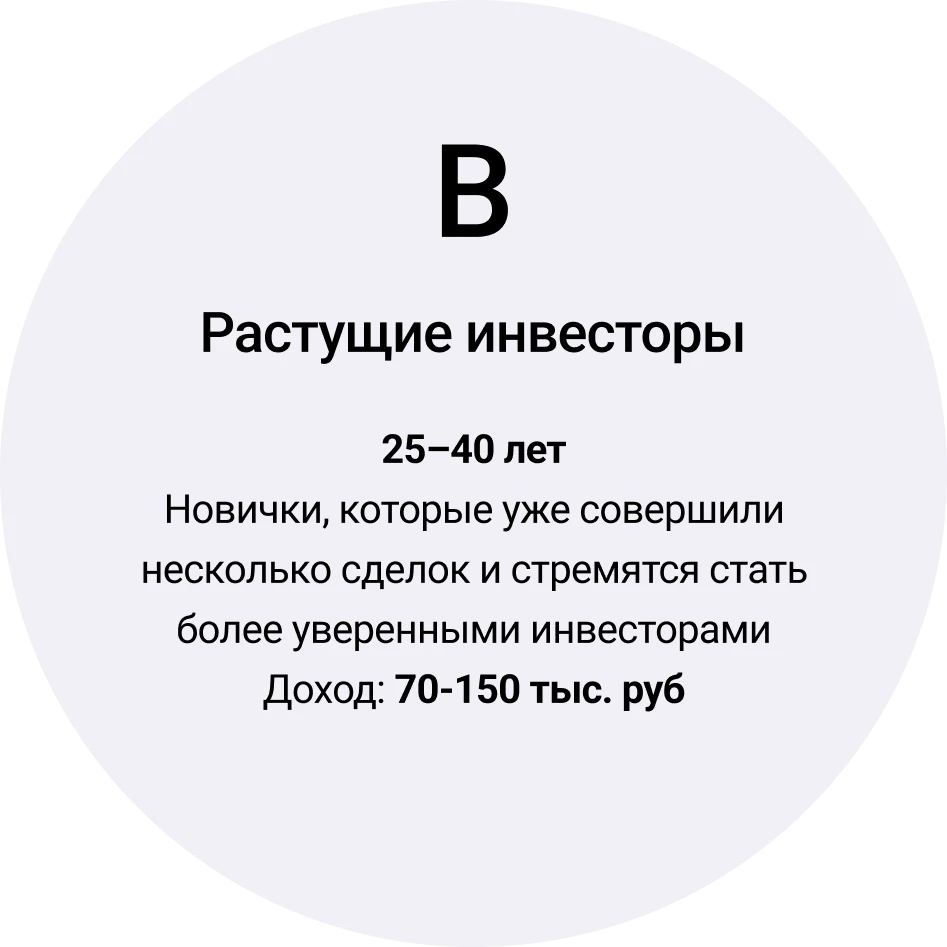
Segment B – Growing Investors

These are users who are actively gaining experience in investing, often at the stage of career and financial growth. The level of income allows them to start investing, and the growth of income over time can contribute to an increase in the amount of investment.

  • They have already started investing, but their activity is lower than that of Segment A.
  • Interested in learning and additional tools to improve your trading strategy
  • Show a desire to increase investment, explore new opportunities and products
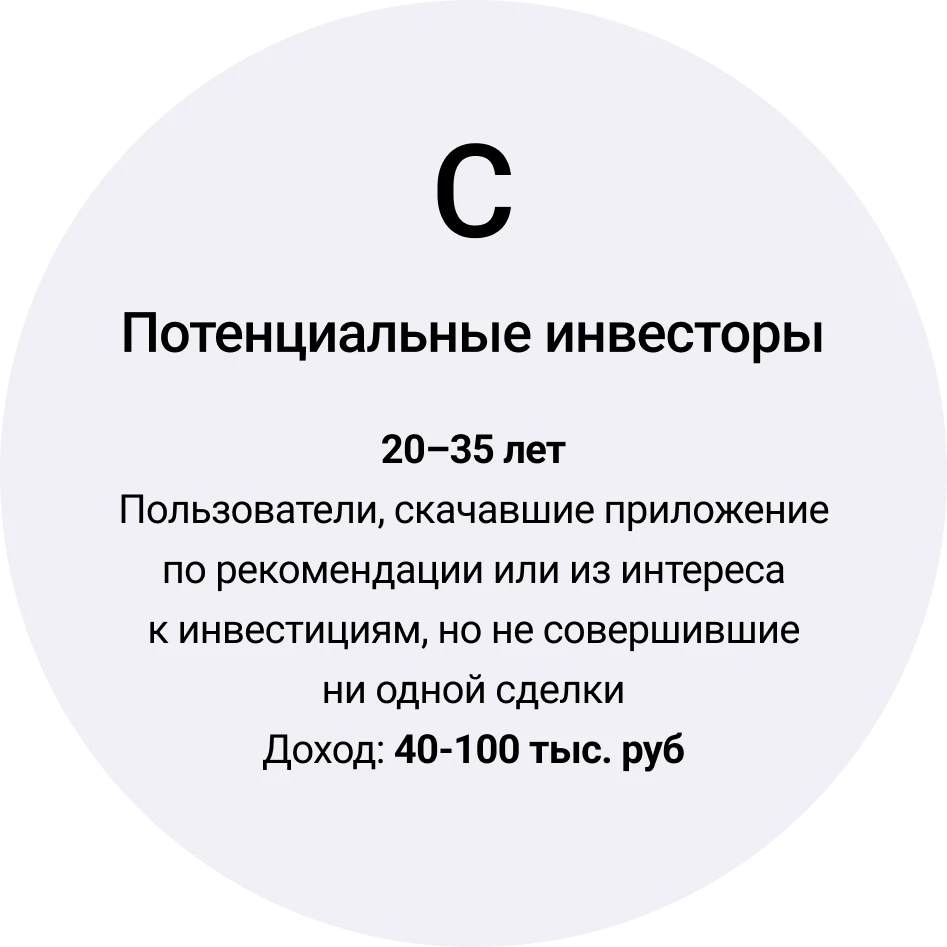
Segment C – Potential Investors

Young professionals and aspiring professionals who are just getting acquainted with the world of investment. Limited financial opportunities can slow the start of active investments, despite high interest in training and market research.

  • Registered in the app and show interest in investments, but have not yet begun to actively invest
  • Spend time in training sections, read analytical materials, but are afraid to take the first step
  • Have basic knowledge but are not ready to invest without support
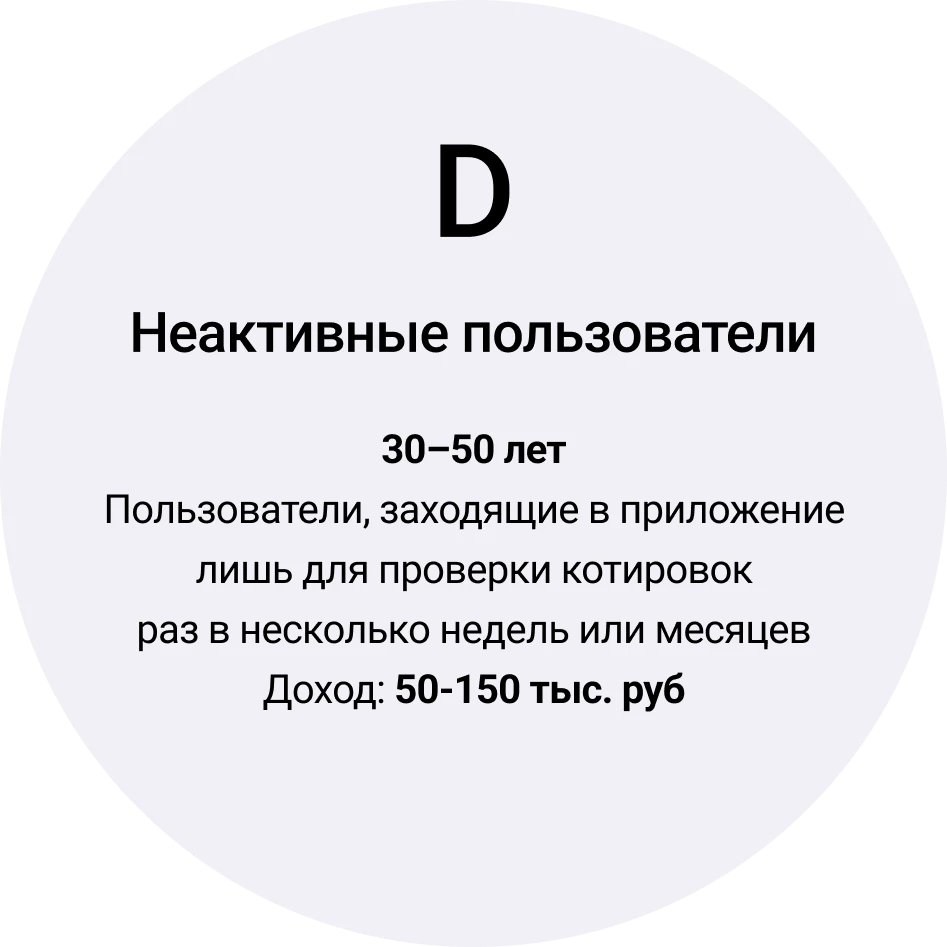
Segment D – Inactive Users

People for whom investment is not a top priority or who are temporarily unable to pay attention. The level of income indicates sufficient, but not always stable financial opportunities, which is reflected in the irregular use of the application.

  • Visit the app from time to time to check current quotes or news, but do not use it regularly
  • They can be both previously active users who have reduced activity, and those who use the application only for general information.
  • Frequently not used for portfolio management
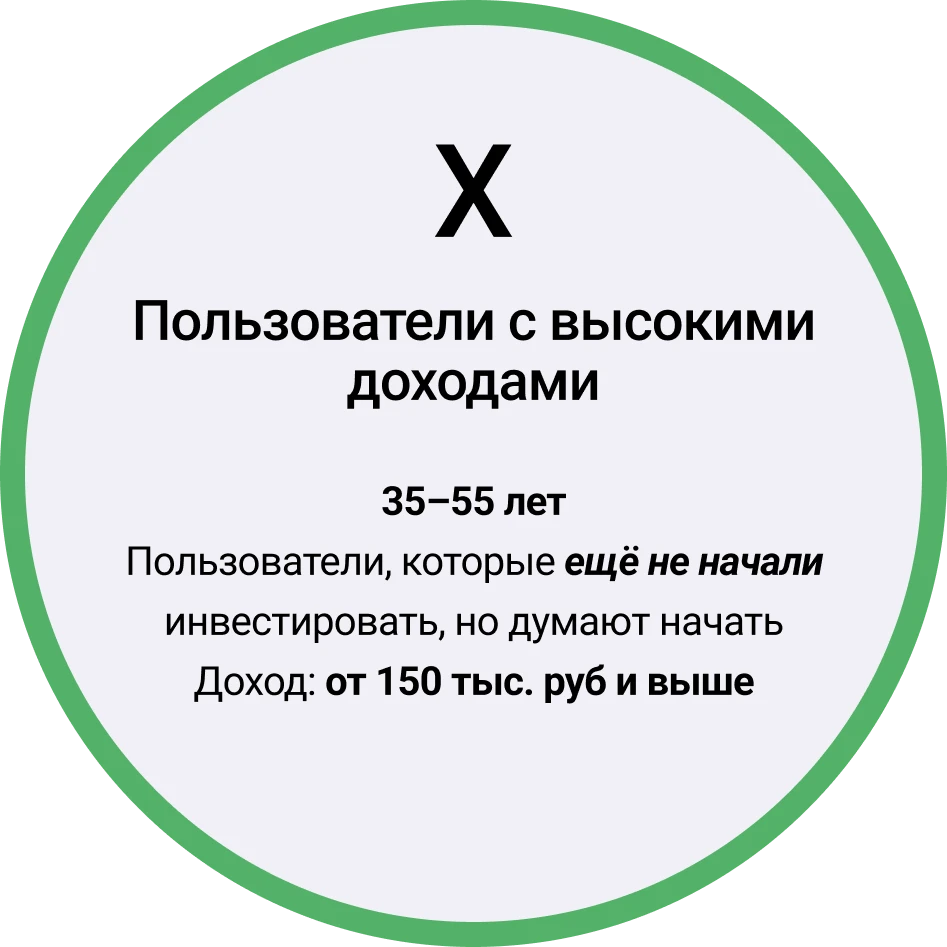
Segment X – High-income users

These are people who have already achieved certain career and financial successes, but are looking for new ways to increase capital. Often have a good education and experience in personal finance management, but may not have in-depth knowledge of investing.

Challenges and barriers:

  • Lack of specific recommendations. We have already studied the basic information, but do not know where to start and which product to choose.
  • Fear of undue risk. Worried about the possibility of losses due to lack of experience in active investing
  • Information overload

Hypotheses

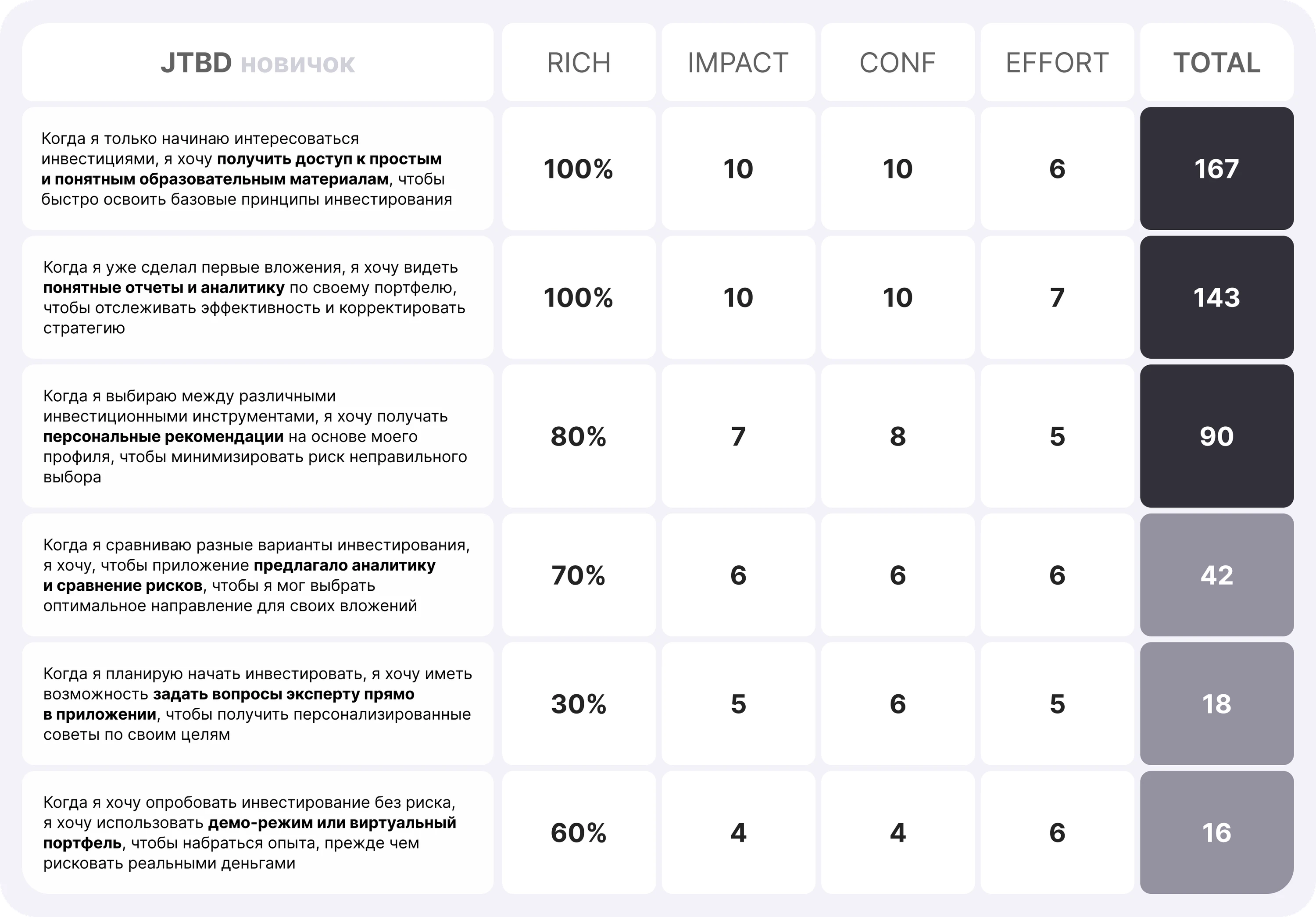
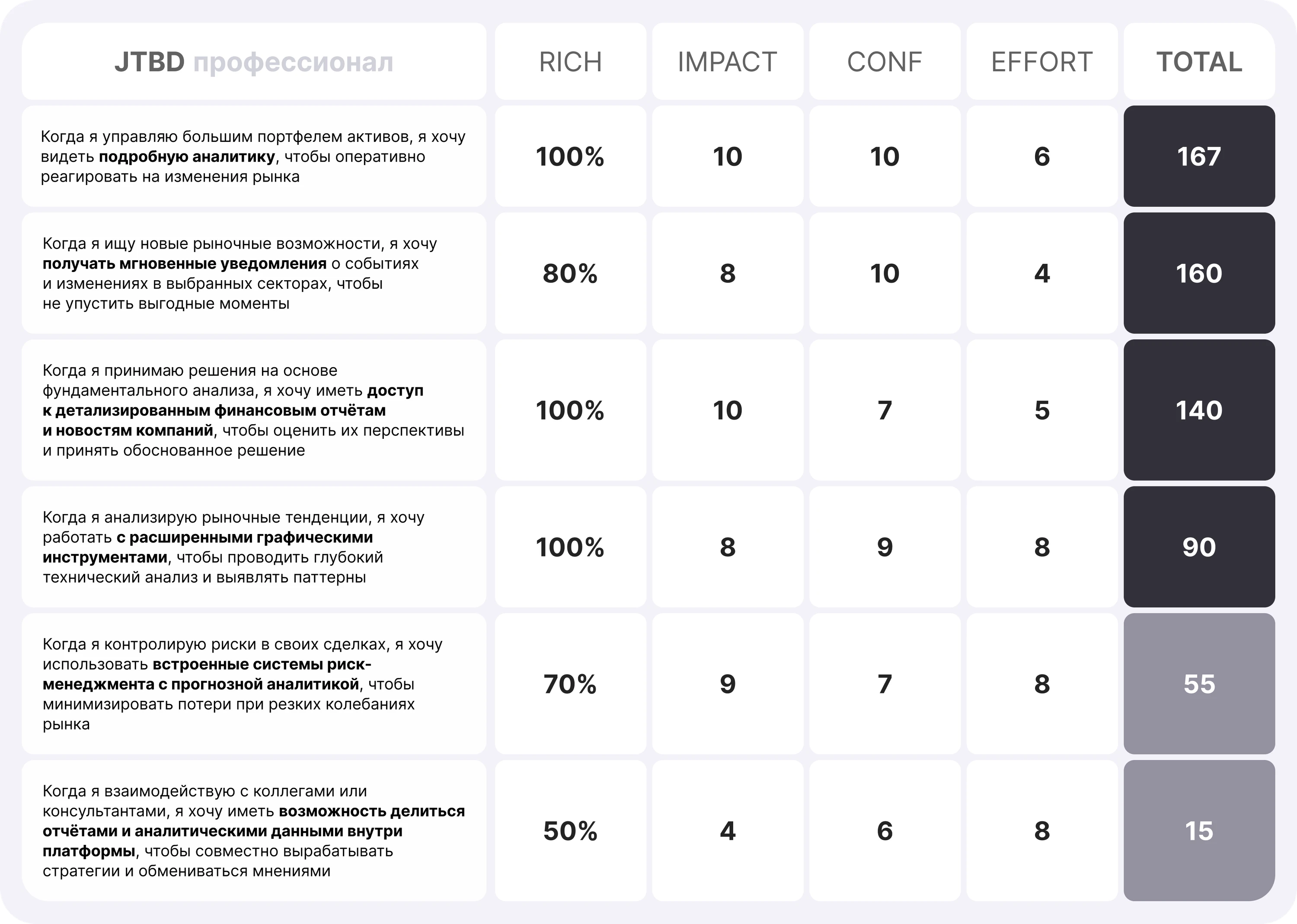
Created hypotheses in JTBD format and prioritized them by RICE

JTBD Hypotheses for Beginner Investor with RICE Prioritization
JTBD Hypotheses for Professional Investors with RICE Prioritization

Metrics

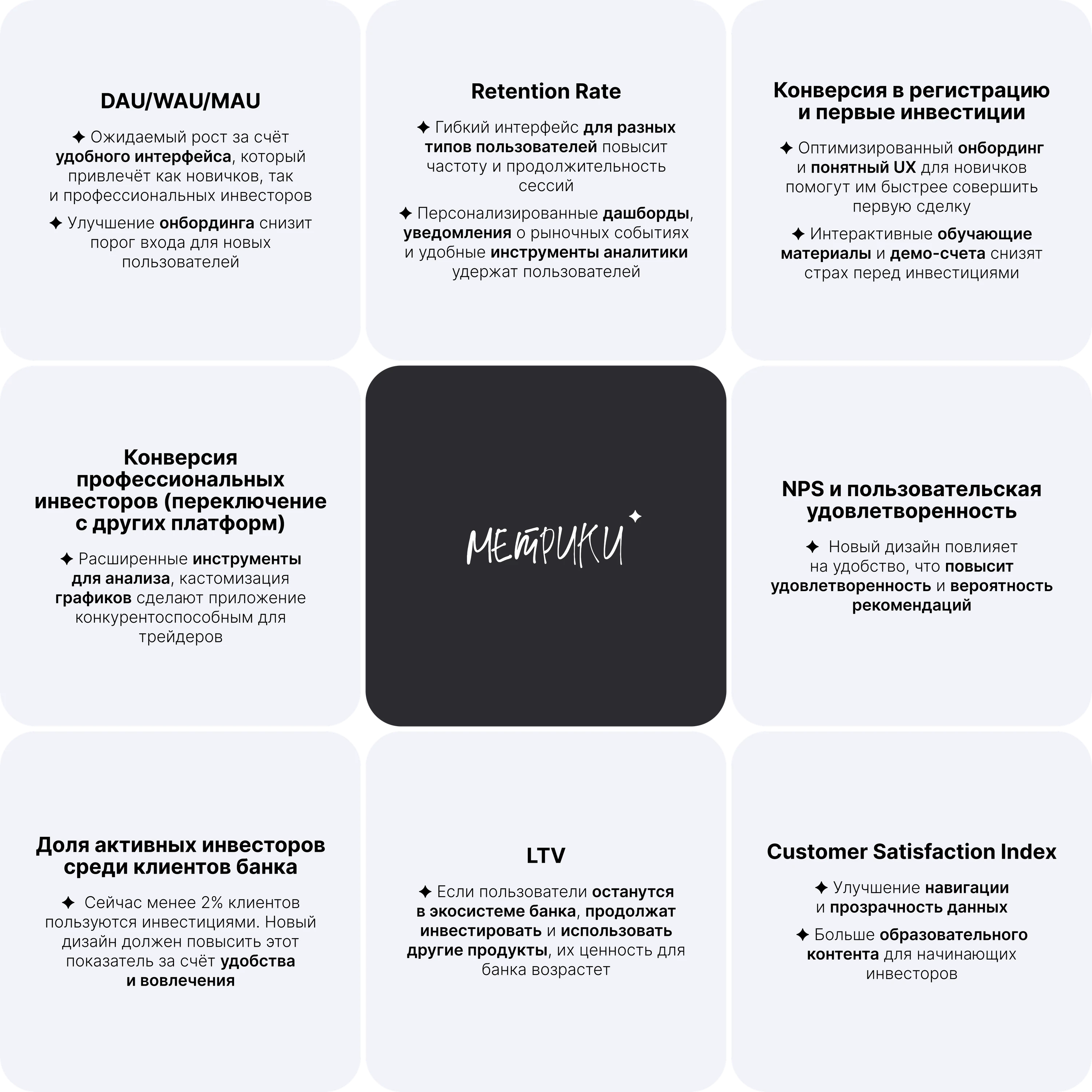
Creating a separate investment app, Renaissance Broker, will affect several key metrics:

Key metrics of the Renaissance Broker app

How do you measure the effect?

  • Cohort analysis (behavior of beginners and experienced investors in an integrated section and a separate application)
  • Funnel analysis (how many users are onboarding, how many make the first investment)
  • Reviews and NPS surveys (to see how convenient a new product is)

If the new design is successful, the bank will see growth in user base, engagement and investment returns.

Mockups

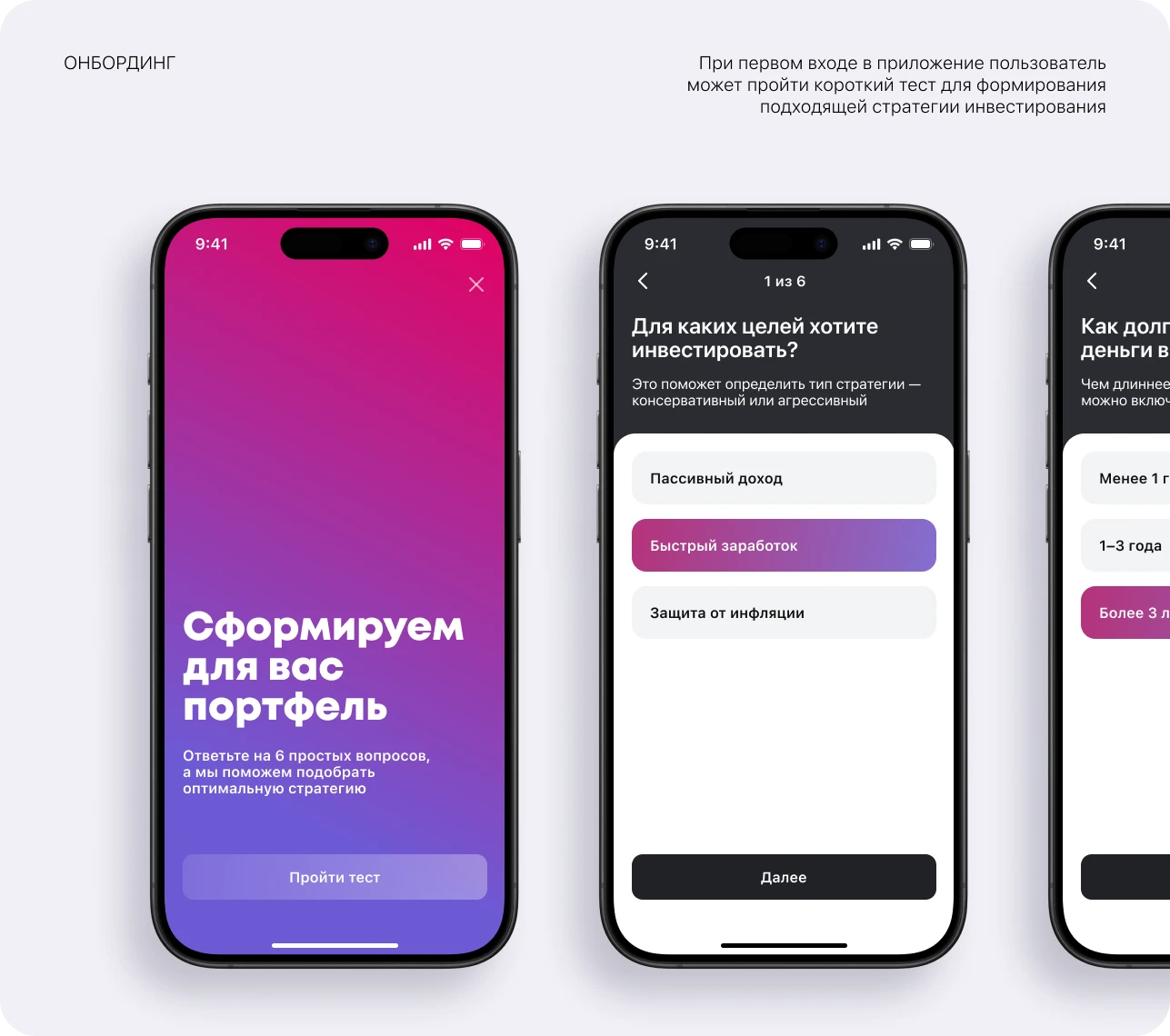
Onboarding screens

Animated screens of investment strategies
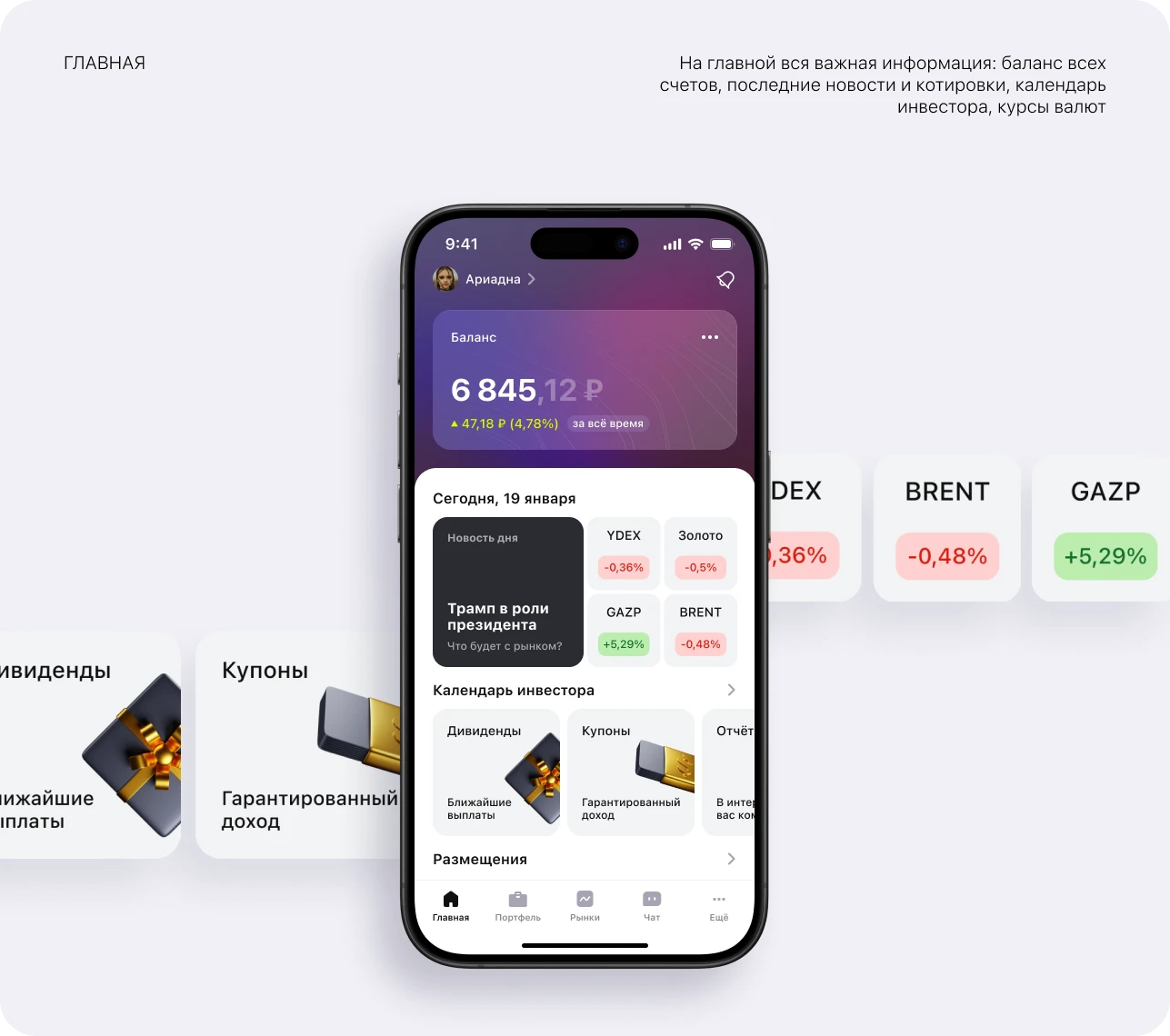
Main screen of the application
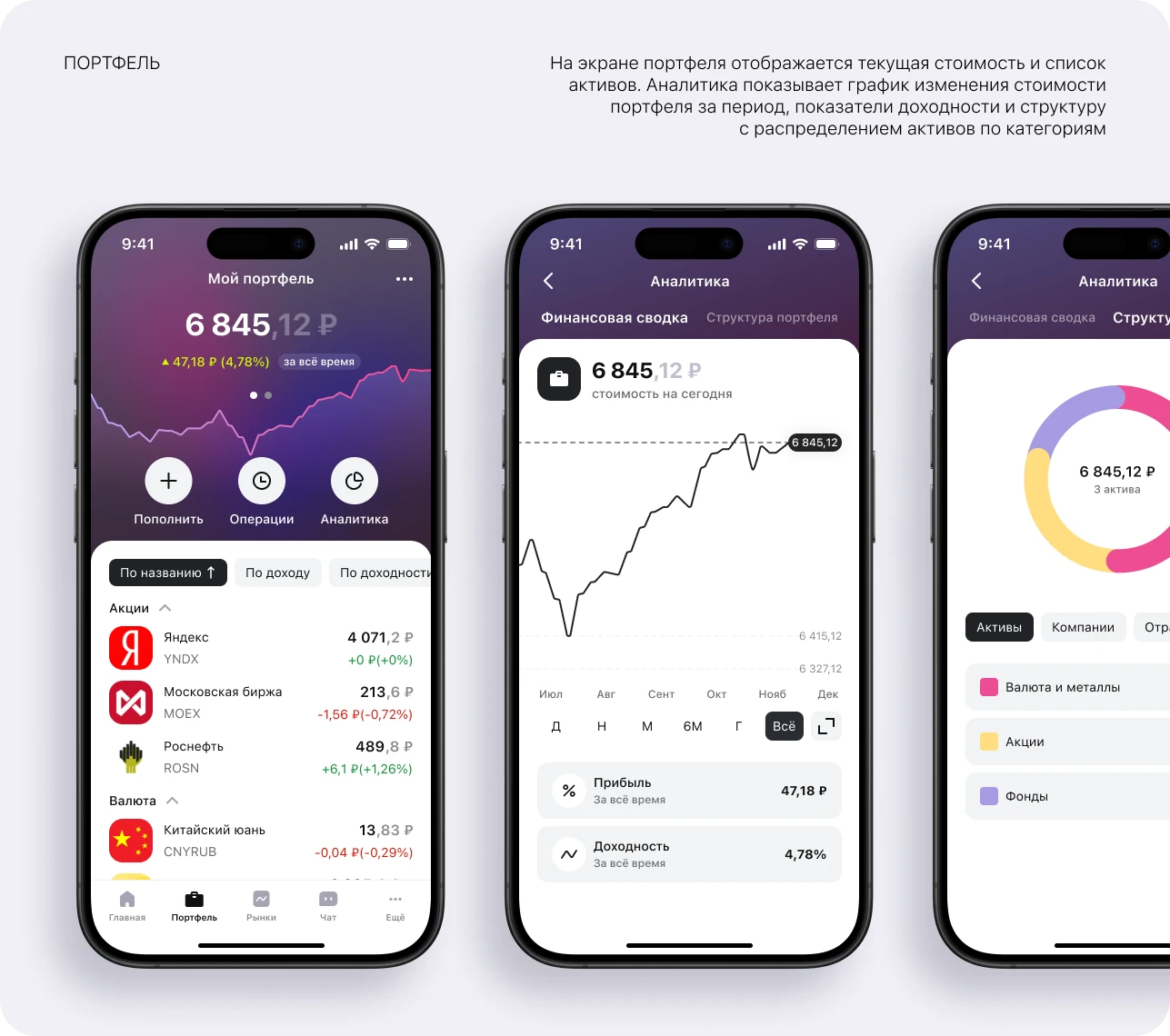
Portfolio screens and analytics
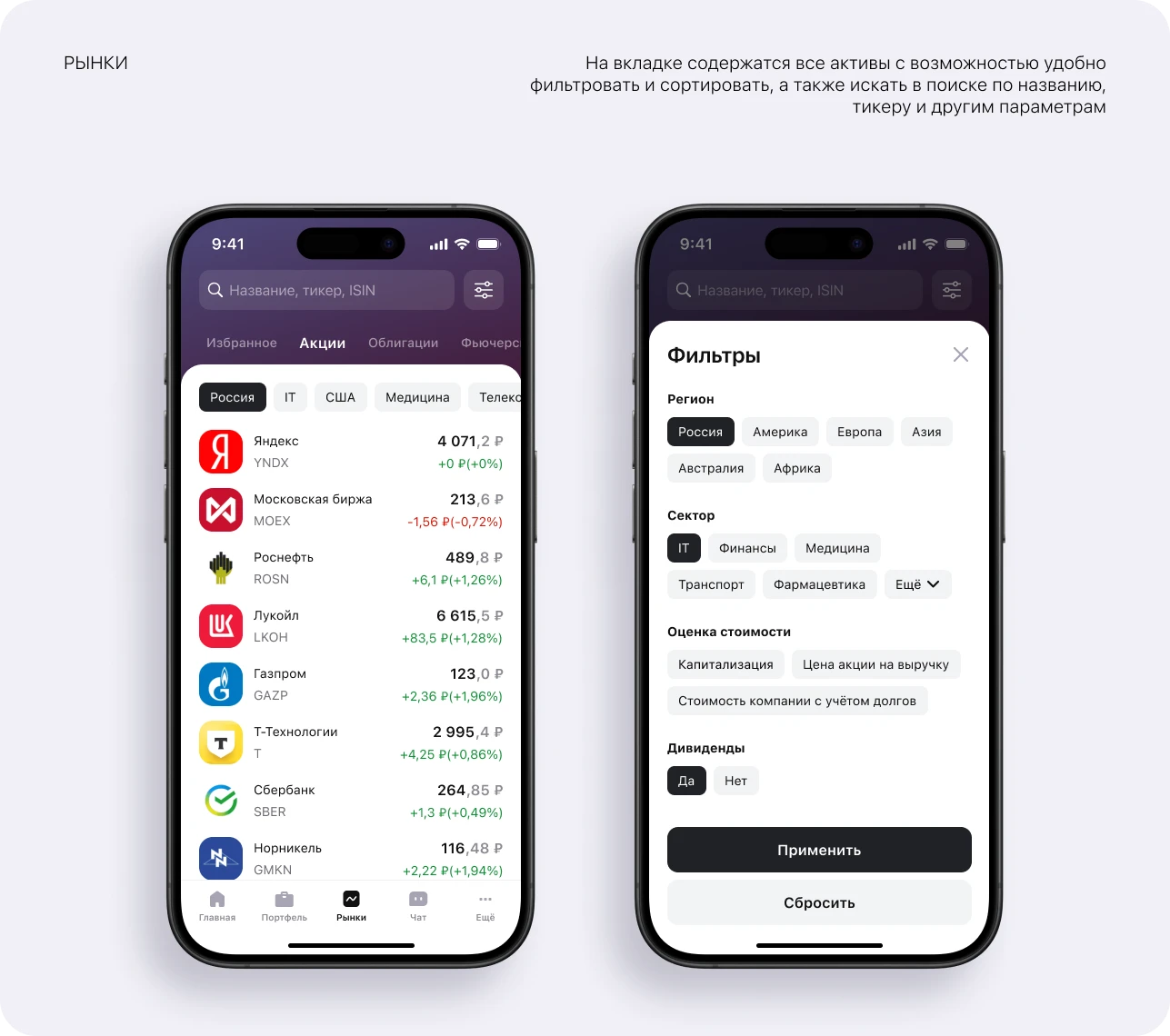
Market and filter screens

Animated asset card
Screens of the application for the purchase of an asset

Outcomes

In the process of working on the case, I had to quickly delve into a new and rather difficult topic for me. The result is an investment app design that combines the functionality experienced investors need with an intuitive interface:

  • Learning materials and strategies are available to beginners to help them quickly join the investment process.
  • Advanced investors are provided with all the important tools for portfolio management: an extended schedule of changes in the price of the asset, a large number of types of applications, quick access to market news and quotations, an investor’s calendar with a large number of applications. Payout reminders, the ability to set up asset alerts and more.
It is important not just to introduce investment tools, but to make them as transparent and understandable as possible to help customers better master new products for them.